Recycling and Sustainability at Gardening Services Addiscombe
Welcome to our commitment page describing how Gardening Services Addiscombe transforms local green care into a model of eco-friendly waste disposal and resilient, sustainable gardening waste management. We balance practical garden maintenance with a strong emphasis on reuse, composting and low-carbon operations. Our approach to recycling and sustainability for Addiscombe gardens is built on measurable targets, local partnerships and careful on-site sorting so that every hedge cut and lawn clearance becomes part of a circular resource stream.Our Sustainable Gardening Waste Disposal Strategy
We operate with a layered, practical system for sustainable rubbish gardening areas and responsible green waste handling. From segregated on-site collection to destination sorting, our teams follow the boroughs' approach to waste separation — separating organics, mixed recyclables and residual waste — to maximise recovery. Our ambition is to reduce landfill contribution and grow a local supply of compost and recycled materials for reuse in community green spaces.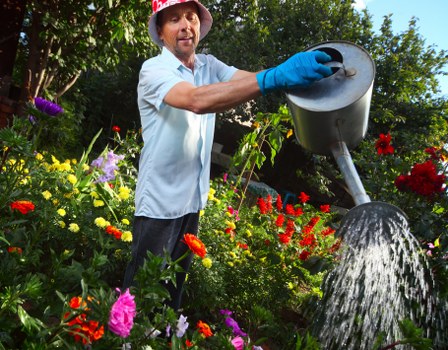 What types of recycling activity do we focus on? We prioritise garden waste composting, wood chipping and reuse of healthy topsoil and turf. We also separate plastics, metals and cardboard from cleared garden waste, diverting those streams into the borough recycling network where possible. These activities feed into a broader eco-friendly waste disposal model adapted to Croydon and neighbouring borough practices.
Local Transfer Stations and Civic Amenity Collaboration
To keep transport carbon low and ensure proper processing, we use nearby transfer stations and council-run recycling centres for different material streams. Where suitable, green waste moves to composting facilities while inert soils and hardcore are taken to appropriate civic amenity sites. Working within the local waste infrastructure helps us shorten journeys and improve material recovery. Our target is clear: we aim to achieve a 70% recycling rate across collected garden and landscaping materials within three years.Partnerships with Charities and Community Groups
We partner with local charities and community organisations to give reusable items a second life. Fallen branches, potted plants in good condition and salvaged soft landscaping elements often find new homes through collaborations with community gardens, social enterprises and charities such as Groundwork and The Conservation Volunteers. These partnerships support community projects and reduce the need for new materials in neighbourhood green spaces.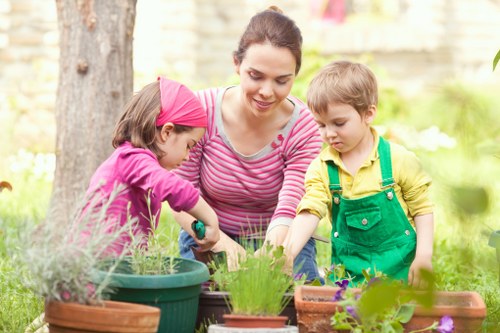 How we work with local initiatives:
- Donate reusable planters and pavers to community gardening projects.
- Supply compost and woodchip to local allotments and volunteer groups.
- Coordinate with borough-run community reuse schemes for larger donations.
Low-Carbon Fleet and On-Site Best Practice
Our operational fleet increasingly uses low-carbon vans — electric and hybrid models — to reduce emissions across our service area. Where electric replacements are not yet practical, we use Euro 6 compliant vehicles and route optimisation to minimise fuel use. On-site, our crews practise careful segregation: green waste into compostable streams, bulky inert materials separated for processing, and recyclables collected separately. This reduces contamination and raises overall recovery rates. Designated sustainable rubbish gardening zones in larger projects create controlled areas for temporary storage and sorting. These on-site micro-hubs allow faster segregation of wood, soil, turf and mixed recyclables, reducing the need for re-sorting at transfer stations. Wood is chipped and reused where suitable, topsoil is retained or treated for reuse, and vegetation clippings are composted in partnership with local facilities when domestic composting is not feasible.